

The History of Watch Winders: From Automatic Watches to a Luxury Industry
# The History of Watch Winders: From Automatic Watches to a Luxury Industry
For enthusiasts of mechanical timepieces, a watch winder is a familiar accessory. Designed to simulate the natural movement of the wrist, a watch winder keeps automatic watches running when they are not being worn. Today, watch winders are considered essential equipment for many collectors, but their origins are relatively recent compared to the centuries-old history of watchmaking.
In this article, we explore the history of watch winders, their connection to the development of automatic watches, and how they evolved from simple practical devices into luxury products.
## Before Watch Winders: The Birth of Automatic Watches
To understand the history of watch winders, we must first look at the invention of automatic watches.
Before the twentieth century, nearly all mechanical watches required manual winding. Owners had to regularly turn the crown to store energy in the mainspring and keep the watch running.
The concept of a self-winding watch dates back to 1770 when Swiss watchmaker Abraham-Louis Perrelet developed one of the earliest known automatic winding mechanisms. His invention used the wearer's body movements to wind the watch. Although primitive by modern standards, it laid the foundation for the automatic watches we know today
.

Over the following centuries, watchmakers continued refining self-winding technology. By the early twentieth century, more efficient rotor systems had been developed, making automatic watches practical for everyday use. As reliability improved, automatic watches became increasingly popular among consumers worldwide.
## A New Problem for Collectors
For decades, automatic watches functioned exactly as intended. Most people owned only one watch, which remained on their wrist throughout the day and received enough movement to stay wound.
However, as luxury watch collecting became more popular during the second half of the twentieth century, many enthusiasts began owning multiple watches. This created a new challenge.
While one watch was being worn, the others remained in storage. After a few days, their power reserves would be depleted and the watches would stop running.
This became especially inconvenient for timepieces featuring complex complications such as:
- Perpetual calendars
- Annual calendars
- Moon phase displays
- Multi-time-zone functions
- Astronomical complications
Resetting these watches could take considerable time and effort. Collectors needed a solution that would keep their automatic watches running even when they were not being worn.
## The First Watch Winders
The earliest watch winders appeared during the 1960s and 1970s. These devices were primarily designed for watch retailers, service centers, and manufacturers rather than private consumers.
Their purpose was simple: to keep automatic watches running while displayed in store windows or during testing and servicing.
Early watch winders were basic machines consisting of:
- An electric motor
- A watch holder
- A rotating mechanism
At this stage, watch winders were considered professional tools rather than consumer products.
## The 1980s: Watch Winders Enter the Collector Market
The 1980s marked a turning point in the history of watch winders.
After the Quartz Crisis of the 1970s, many believed mechanical watches would disappear. Instead, luxury mechanical watchmaking experienced a remarkable revival. Collectors began appreciating traditional craftsmanship, intricate movements, and the heritage of Swiss watchmaking.

As more enthusiasts built collections containing several automatic watches, demand for home watch winders increased rapidly.
Manufacturers responded by developing products specifically for collectors. These new watch winders not only performed a practical function but were also designed to look attractive in offices, bedrooms, and watch displays.
The watch winder had begun its transformation from a technical tool into a consumer accessory.
## Technological Advancements in Watch Winders
Early consumer watch winders had several limitations:
- Noisy motors
- High power consumption
- Continuous, unnatural rotation
- Limited customization options
As technology improved, manufacturers introduced increasingly sophisticated features.
### Turns Per Day (TPD) Programming
Different watch movements require different amounts of rotation to remain fully wound. Modern watch winders allow users to set the number of Turns Per Day (TPD), ensuring compatibility with a wide range of automatic movements.
### Directional Control
Some watches wind clockwise, others counterclockwise, and many can wind in both directions. Advanced watch winders allow users to select the appropriate rotation direction for each watch.
### Quiet Motors
The introduction of high-quality Japanese and German motors significantly reduced operating noise. Modern premium watch winders are often quiet enough to be used in bedrooms and offices without disturbance.
### Intelligent Rotation Cycles
Instead of rotating continuously, many modern watch winders operate in programmed intervals. These rest periods better replicate natural wrist movement while reducing unnecessary wear on the winding system.
## From Utility Device to Luxury Product
One of the most interesting aspects of watch winder history is its evolution into a luxury category.
Originally, buyers cared only about functionality. The goal was simply to prevent watches from stopping.
Over time, however, aesthetics became increasingly important. Manufacturers began using premium materials such as:
- Walnut wood
- Ebony wood
- Carbon fiber
- Aircraft-grade aluminum
- Genuine leather
- Crystal glass
As a result, watch winders became display pieces in their own right.
Today, many collectors view a watch winder as part of their collection rather than merely an accessory. High-end models often complement luxury interiors and showcase valuable timepieces in an elegant manner.
## Do All Automatic Watches Need a Watch Winder?
The simple answer is no.
An automatic watch can function perfectly well without a watch winder. If left unworn, the watch will eventually stop once its power reserve is exhausted. The owner can then reset and restart it when needed.
However, watch winders can be particularly useful for:
- Collectors with multiple watches
- Watches worn on a rotating schedule
- Perpetual calendar watches
- Annual calendar watches
- Moon phase watches
- Complex luxury timepieces
In these situations, a watch winder saves time and ensures the watch is always ready to wear.
## The Modern Watch Winder Market
Today's watch winder market covers a wide range of products and price points.
Entry-level models are designed for single watches and focus on affordability and practicality. At the other end of the spectrum, luxury watch winders can cost thousands of dollars and accommodate large collections.
Modern premium models may include:
- Biometric security systems
- Smartphone connectivity
- LED lighting
- Jewelry storage compartments
- Custom winding programs
- Touchscreen controls
The growth of advanced electronics and manufacturing technologies has also enabled smaller independent brands to enter the market, offering highly customized and innovative solutions.
## The Future of Watch Winders
Although the core purpose of a watch winder remains unchanged, the technology continues to evolve.
Future watch winders may incorporate features such as:
- Automatic movement recognition
- App-based management systems
- Energy-efficient operation
- Smart winding algorithms
- Modular expansion systems
As mechanical watch collecting continues to grow worldwide, watch winders are likely to remain an important part of the enthusiast ecosystem.
## Conclusion
The history of the watch winder is closely tied to the rise of automatic watches and modern watch collecting. What began as a practical tool for retailers and watchmakers has evolved into a sophisticated accessory appreciated by collectors around the world.
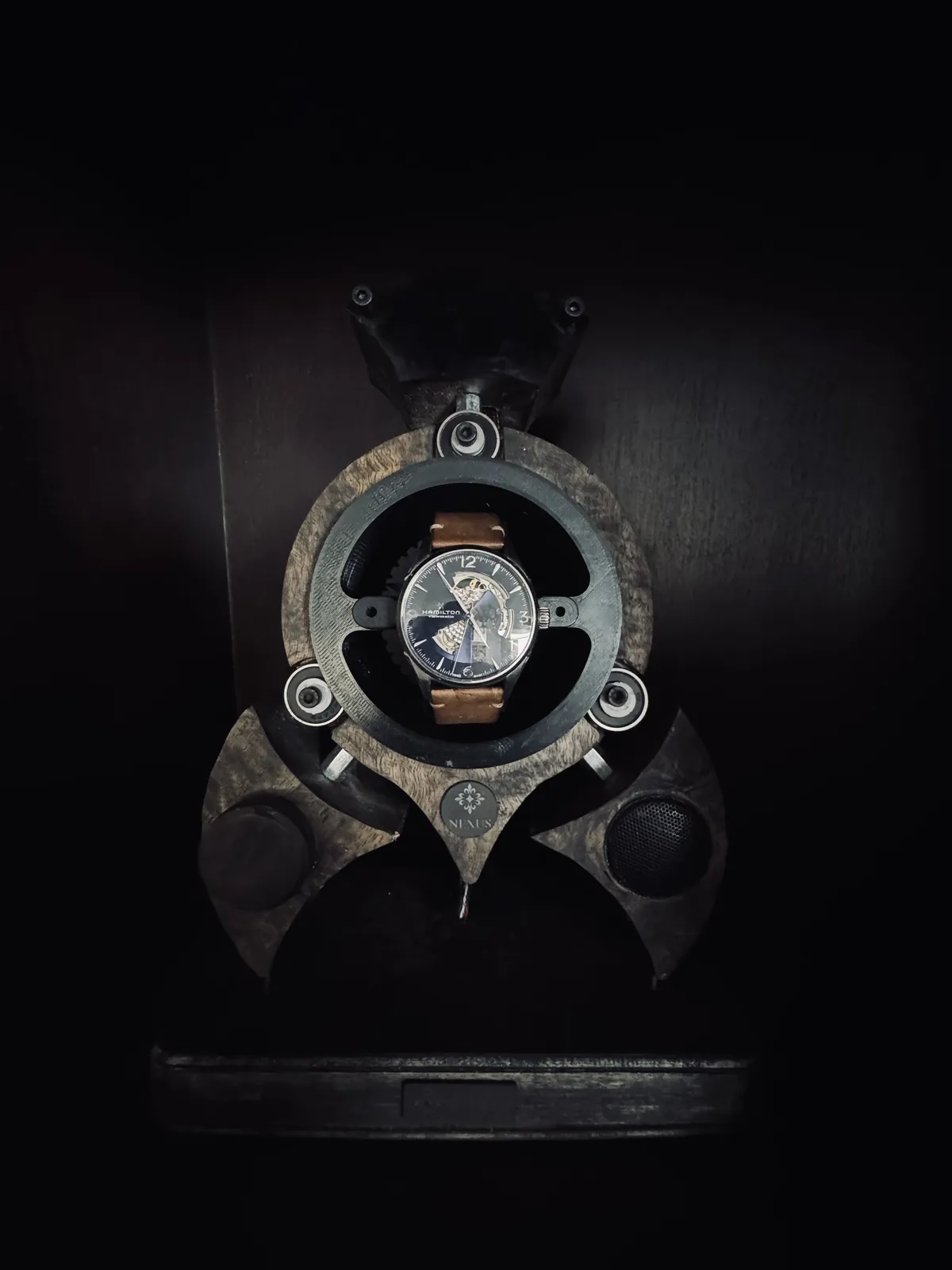
Today, a watch winder serves not only as a functional device but also as a display piece that enhances the ownership experience of luxury mechanical watches. Whether used for convenience, preservation, or presentation, the watch winder has secured its place in the world of horology and continues to evolve alongside the watches it was created to s